No. 01
Ask, don't assign
Show them the app, let them decide. 'This part is yours if you want it' lands very differently from 'we've set this up for you'.
Topic guide · Young Person Hub
Most tools for young people with additional needs are really tools for watching young people with additional needs. Heedli's Young Person Hub was designed with young people, for the version of support that doesn't feel like surveillance.
The reality
Young people growing up with SEND spend a lot of time being discussed — in meetings, in reports, in other people's words. What they rarely get is a space where their own account of the day comes first, in their own words, at their own pace.
Self-advocacy doesn't start at the annual review. It starts with small, private practice: noticing a feeling, naming it, deciding whether to share it. That's what the Hub is for.
In practice
The Hub works best when it's offered, not assigned. A few things that tend to make the difference.
No. 01
Show them the app, let them decide. 'This part is yours if you want it' lands very differently from 'we've set this up for you'.
No. 02
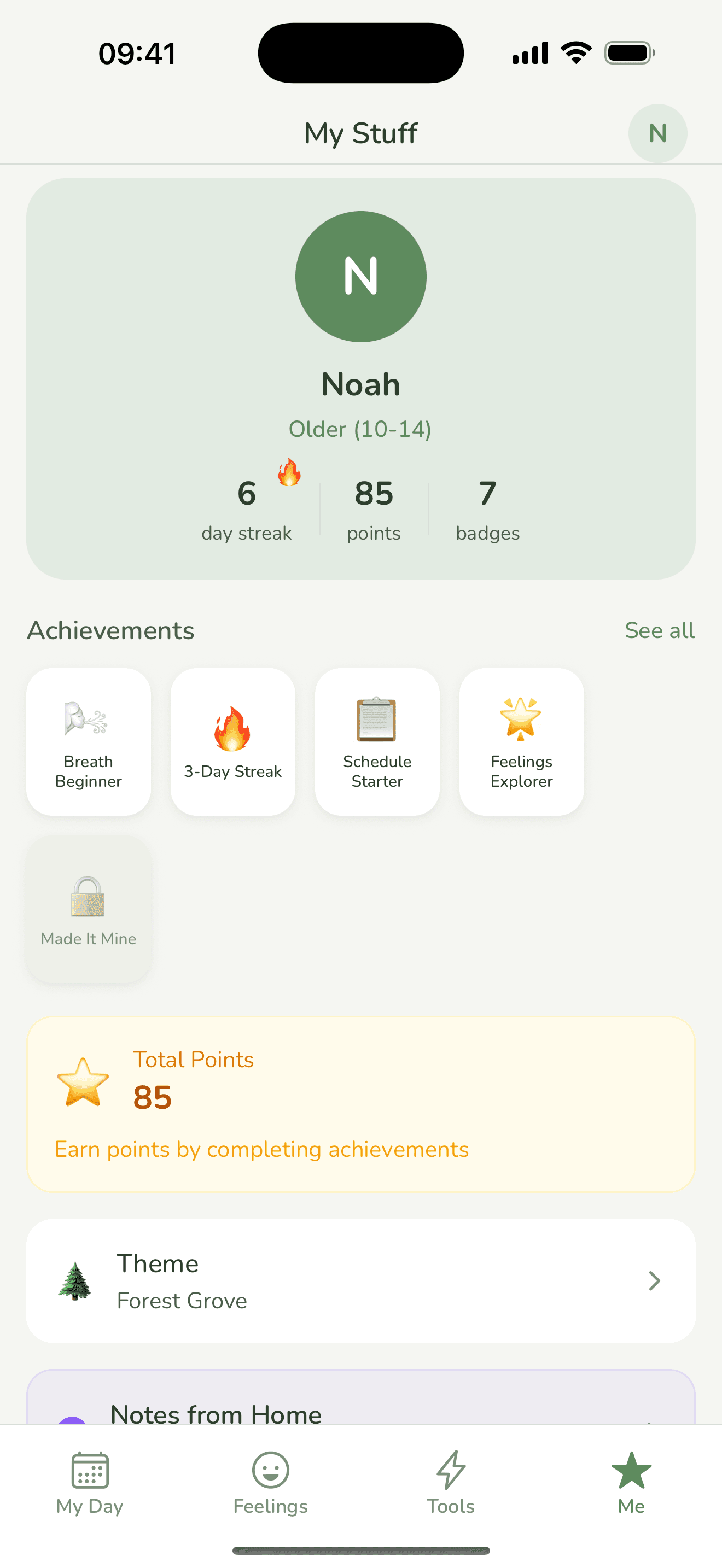
Themes and avatars sound cosmetic — they're ownership. A space that looks how they chose is a space they'll come back to.
No. 03
The privacy controls are set by you, but the conversation is the point. Decide together what stays private and what's shared — and honour it.
No. 04
Some young people log every day; some open it twice a month. Both are fine. Quiet badges celebrate showing up without turning feelings into a scoreboard.
No. 05
Calm tools and helplines live inside the Hub too. Make sure they know the app is never the only door — and that asking for help is the move, not the failure.
Inside Heedli
A separate, secure space — they join with a code from you, no email address required for them.
A simple daily log of how things actually felt — theirs to keep, with sharing always optional.
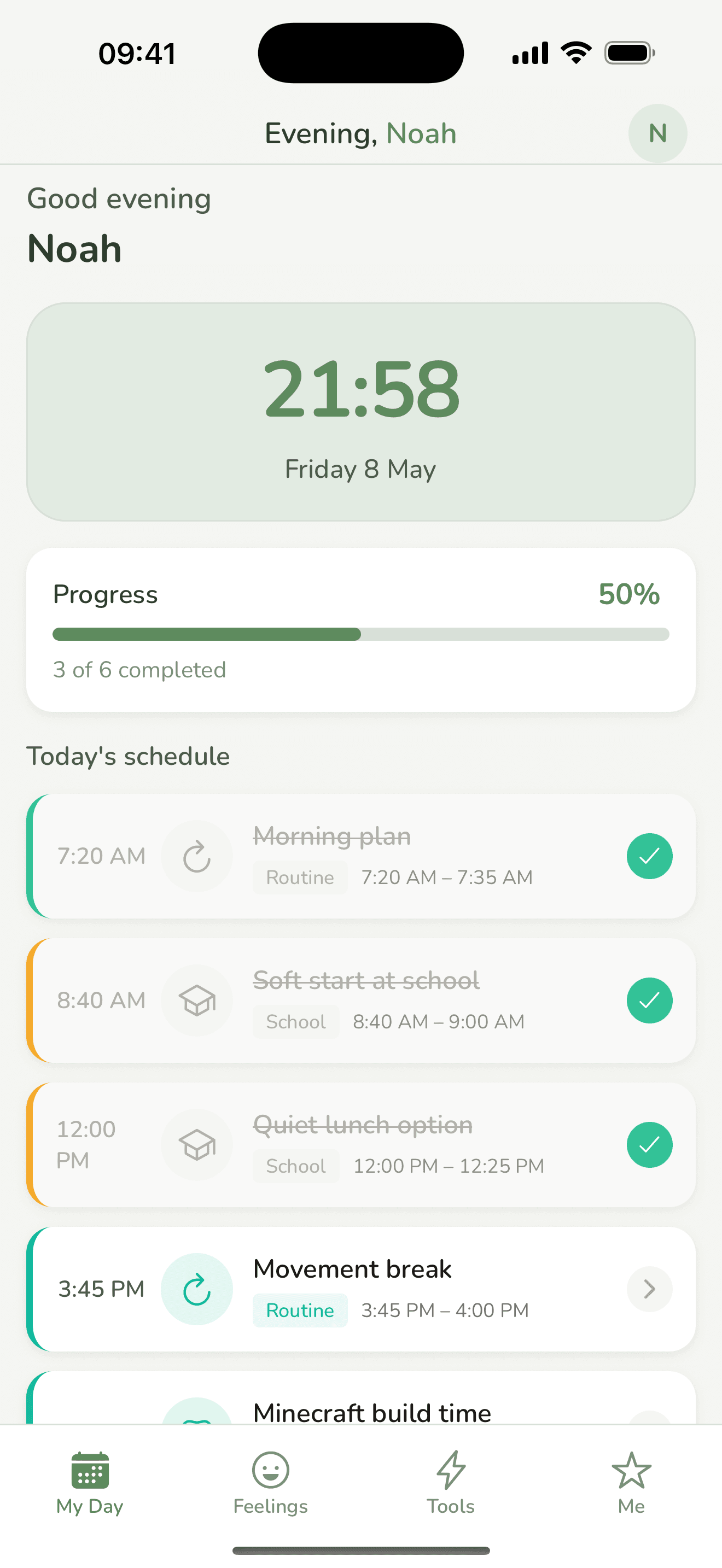
Their schedule, their way — what's coming today, so transitions arrive with less ambush.
Notes that belong to them, with the choice to share an entry when they want a grown-up to know.
Streaks and badges that aren't shouty — recognition for showing up, designed with young people rather than at them.
Common questions
No. They join with a code from you whenever you're both ready — no email, no marketing, nothing to sign up for.
The Hub is their space, with age-appropriate privacy controls that you set. Journal sharing is optional and theirs to choose — which is exactly what makes them willing to write honestly in it.
No. It's a wellbeing space — a place to notice, name and share feelings. It doesn't replace professional support, and crisis helplines are signposted inside the app.
Then nothing is lost — the parent side of Heedli still works fully. Leave the invitation open; a space that's genuinely theirs is sometimes taken up long after it's first offered.
Keep reading
Free to download on iOS and Android. Built for daily life, school meetings and hard moments.
Questions? We answer every email.