No. 01
Anyone can request an assessment
You don't need the school's permission, and your child doesn't need a diagnosis. A parent, the young person (over 16), or the school can ask the local authority for an EHC needs assessment in writing.
Topic guide · EHCP
An Education, Health and Care Plan can unlock real support — and the process of getting one can swallow a family whole. Heedli keeps the evidence, the deadlines and the letters in one place, so the 11pm panic has somewhere to go.
The reality
The EHCP process runs on paperwork: a request letter, evidence of what's already been tried, reports from people who see your child for an hour, deadlines that matter enormously and arrive quietly. Meanwhile the actual evidence — what mornings are really like, what helped last term, the pattern only you can see — lives in your head, your camera roll and a hundred school emails.
You shouldn't need a filing system and a law degree to ask for support. But a good record, kept as you go, changes how every meeting and every letter lands.
In practice
EHC plans apply in England, under the Children and Families Act 2014 and the SEND Code of Practice. Here is the honest version of how it works.
No. 01
You don't need the school's permission, and your child doesn't need a diagnosis. A parent, the young person (over 16), or the school can ask the local authority for an EHC needs assessment in writing.
No. 02
The local authority has 6 weeks to decide whether to assess, and the whole process — from request to final plan — has a legal maximum of 20 weeks. Delays happen in practice; knowing the dates helps you chase them.
No. 03
What support has been tried, what happened, and what your child's days actually look like. A dated, everyday record — sleep, school, incidents, what worked — often says more than any single report.
No. 04
Support in Section F of a final plan is legally enforceable — but only if it's specific. 'Access to sensory breaks' is not the same as 'a 10-minute supervised sensory break every morning'. Read drafts closely and ask for specifics.
No. 05
IPSEA and your local SENDIASS service give free, independent advice. If the local authority refuses to assess or to issue a plan, you have a right to mediation and to appeal to the SEND Tribunal — and many parents win.
This page is general information about the system in England, not legal advice. Processes differ in Scotland, Wales and Northern Ireland. For advice on your situation, IPSEA and SENDIASS are free and independent.
Inside Heedli
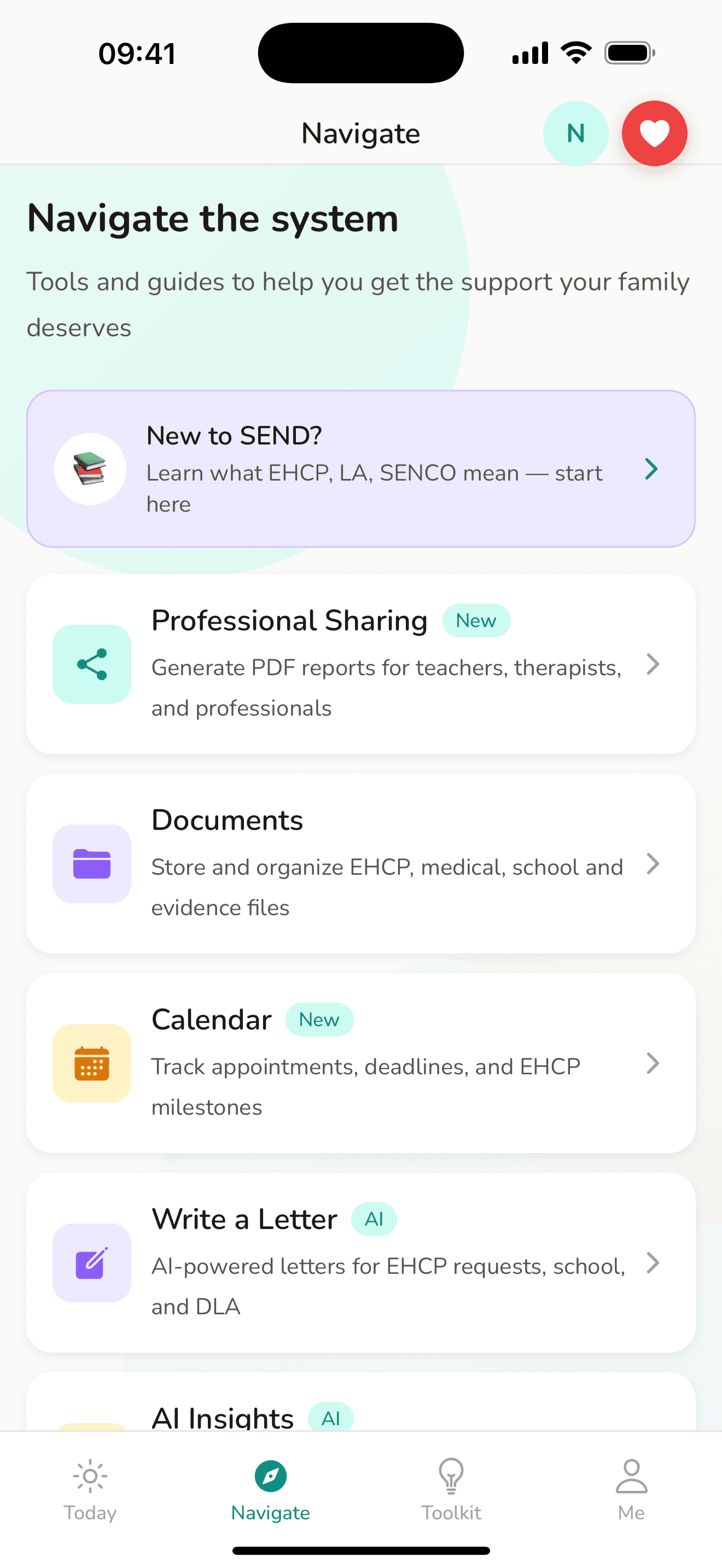
Heedli doesn't file the request for you — it makes sure that when you sit down to do it, everything you need is already in one place.
Two-minute daily check-ins quietly become a dated timeline of needs, incidents and what helped — exactly the evidence assessments ask for.
A calendar built around statutory timescales and annual reviews, with reminders before the dates that matter.
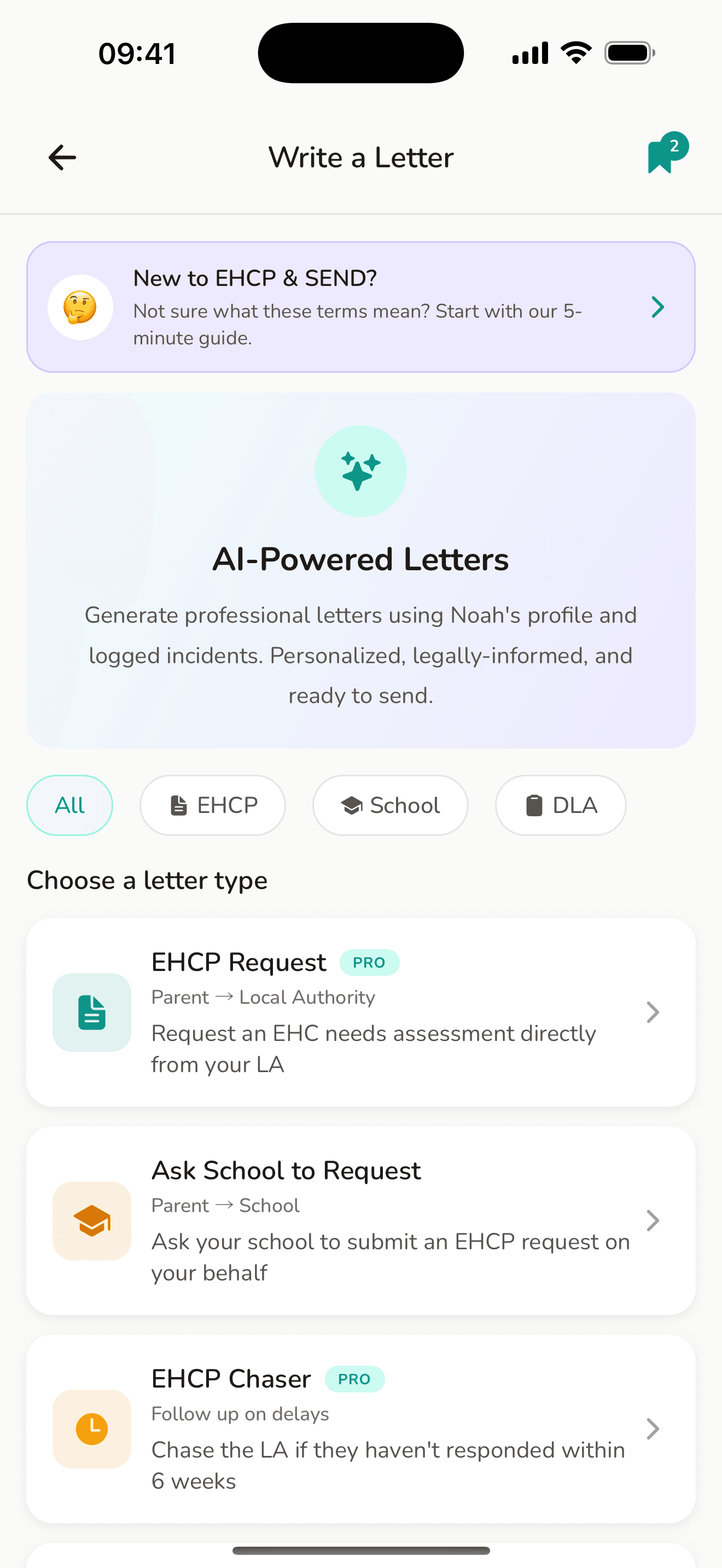
AI-assisted drafts for requests and responses to the local authority or school — you review and edit every word before anything is sent.
Reports, drafts and school letters organised and ready to hand to whoever needs them next.
Common questions
No. Assessments are about needs, not diagnoses. If your child may need more support than their school can normally provide, you can request an assessment — with or without a diagnosis, and without waiting for one.
The legal maximum is 20 weeks from the request to the final plan, with a decision on whether to assess due within 6 weeks. In practice many local authorities run late, which is why keeping your own record of the dates matters.
It helps you draft letters that you edit and send yourself, and it keeps your evidence organised. It isn't legal advice — for that, IPSEA and your local SENDIASS service are free and genuinely good.
A dated record of everyday life: what support has been tried, incidents and their triggers, sleep and school patterns, and what actually helped. Professional reports matter too — but the day-to-day pattern is the part only you can provide.
Keep reading
Free to download on iOS and Android. Built for daily life, school meetings and hard moments.
Questions? We answer every email.