Topic guide · Autism & ADHD

Autism and ADHD family support, day by day.

Whether you're years into a diagnosis or second on a waiting list that's years long, the day-to-day work is the same: notice the patterns, find what helps, and get the people around your child to see what you see.

The reality

The waiting list is not a waiting room.

Assessment waits for autism and ADHD in the UK are long — often years. Families are routinely told to come back when there's a diagnosis, as if the sensory overwhelm, the sleep that never settles and the after-school explosions are on hold until then.

They're not. And here's the thing the system doesn't say loudly enough: support at school doesn't require a diagnosis, DLA doesn't require a diagnosis, and understanding your own child certainly doesn't. The record you start today is useful this term — and gold by the time the assessment finally comes.
In practice

What actually helps, starting now.

None of this needs a referral, a letter, or anyone's permission.

No. 01

Start the record today

A dated, everyday record of needs and patterns helps school now and gives any future assessment something better than memory to work from. Waiting for the diagnosis to start writing things down is the most common regret we hear about.

No. 02

Track more than behaviour

Sensory triggers, sleep, food, transitions, energy. The 'behaviour' is usually the last link in a chain — the record is how you find the earlier links.

No. 03

Write down the wins too

What helped, what a good day looked like, the strategy that worked at the supermarket. Strengths and successes belong in the record — for morale, and because professionals genuinely need them.

No. 04

Take the pattern to school

SEN support starts on needs, not labels. A SENCO shown three weeks of dated patterns can act this half-term instead of 'after the assessment'.

No. 05

Look after the adults

Parent carers run on empty for years at a stretch. Your check-ins matter too — burnout patterns are patterns, and they're the ones everyone else forgets to track.

Heedli is a support and organisation tool, not a diagnostic, screening or treatment tool. For assessment and clinical advice, speak to your GP, school or local neurodevelopmental service.

Inside Heedli

How Heedli carries its share.

Built around the things autism and ADHD families actually track — not a generic mood diary with a new coat of paint.

Check-ins that know the territory

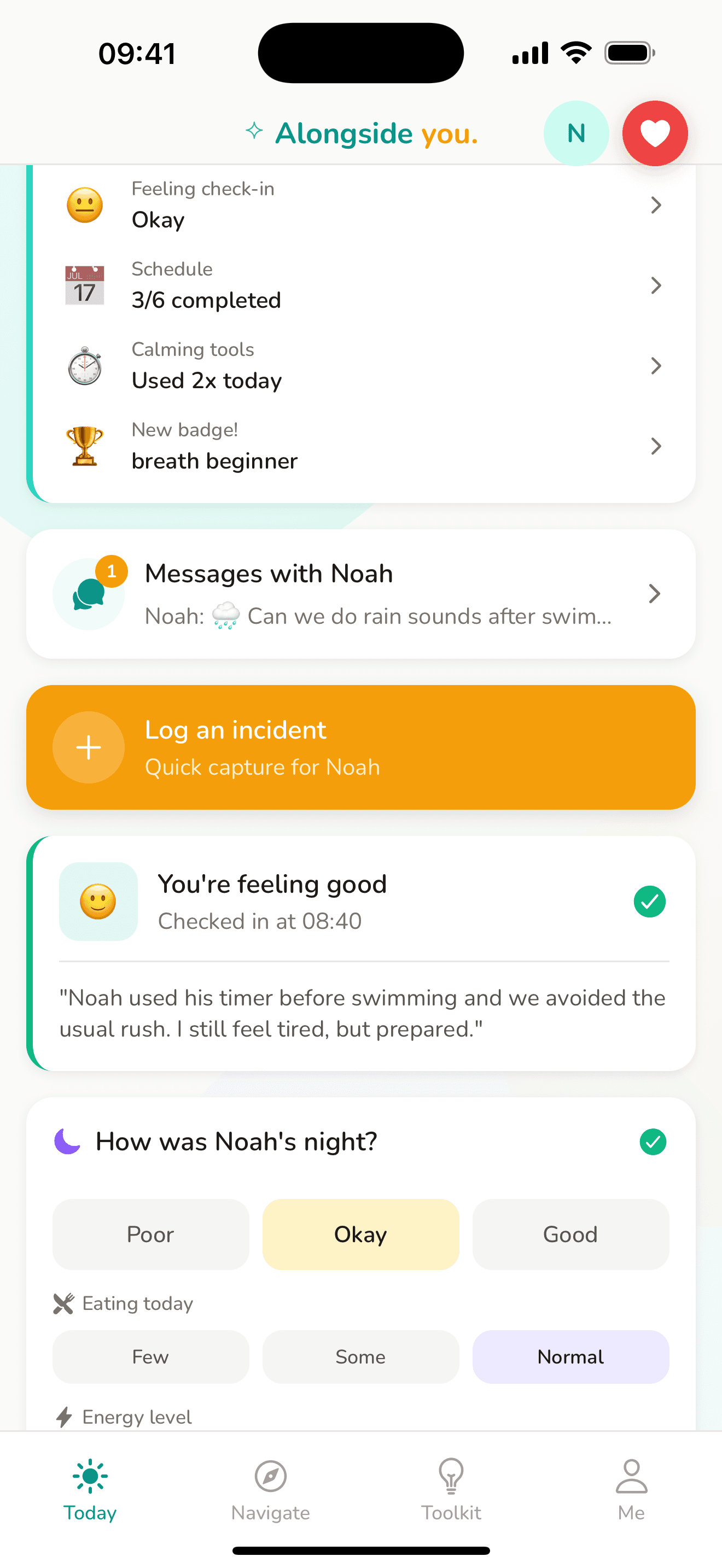
Mood, sleep, eating, energy and school in two minutes a day — with room for the sentence that mattered.

Triggers and sensory patterns

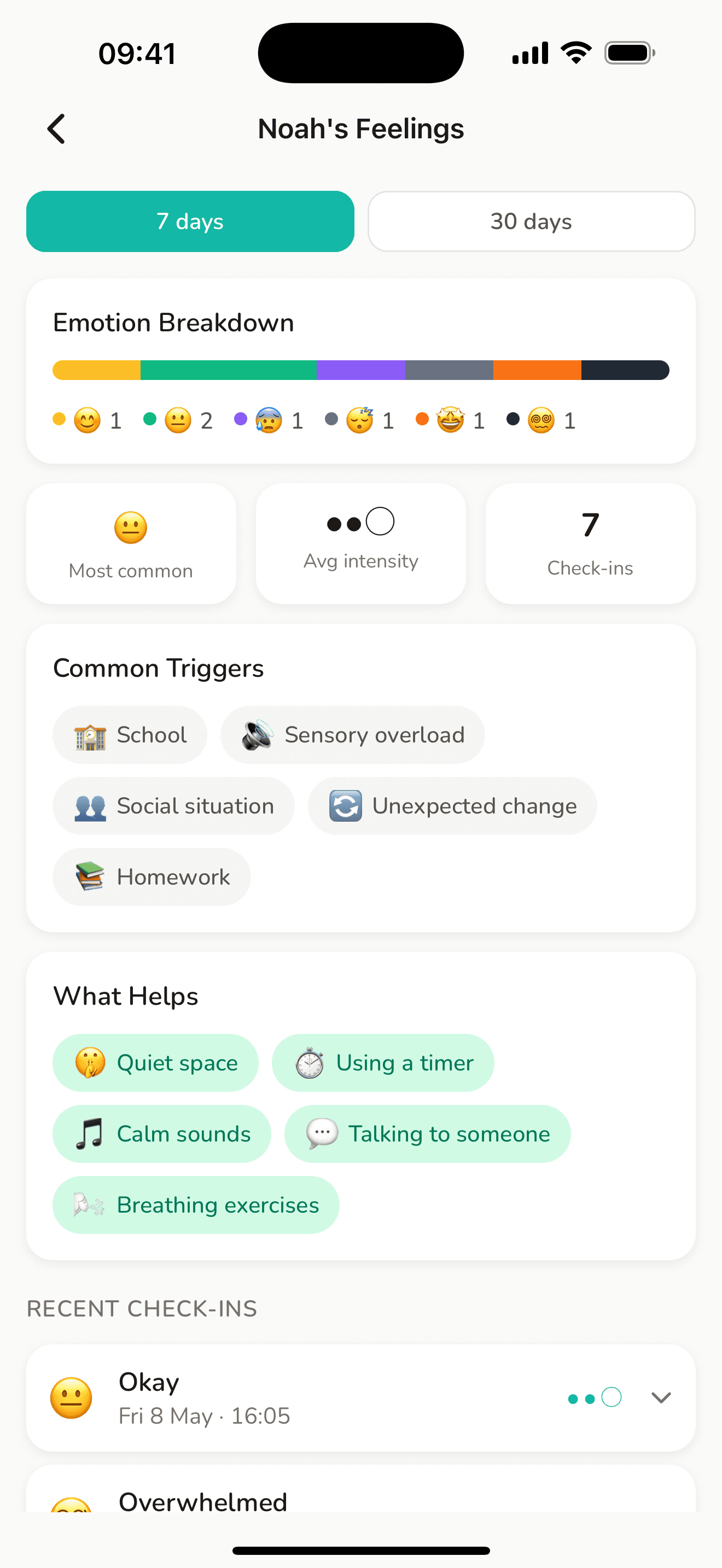
Log hard moments with their context, and let the insights surface what the difficult days have in common.

A strategies bank

The things that help, saved where you'll find them again — because 'what worked last time?' deserves a better answer than guessing.

Their own space too

The Young Person Hub gives your child their own feelings log, schedule and calm tools — designed with young people, not just for them.

Common questions

Asked by parents like you.

Do we need a diagnosis to use Heedli?

No. Heedli is built for families navigating additional needs at any stage — suspected, waiting, newly diagnosed or years in. The patterns are real either way.

Can the record help with an autism or ADHD assessment?

A dated record of real days is exactly the kind of information assessments draw on — much better than reconstructing two years from memory in a clinic room. Heedli isn't a diagnostic or screening tool, though; that part belongs to the professionals.

Is Heedli only for autism and ADHD?

No — it's built for SEND families broadly. Autism and ADHD come up most because they're the most common journeys, but the tools work for any additional need.

We're on a waiting list. Where do we start?

Start the record, this week. Then use it: ask the SENCO about SEN support (no diagnosis needed), consider whether DLA applies (also no diagnosis needed), and save the strategies that work so the good days repeat.